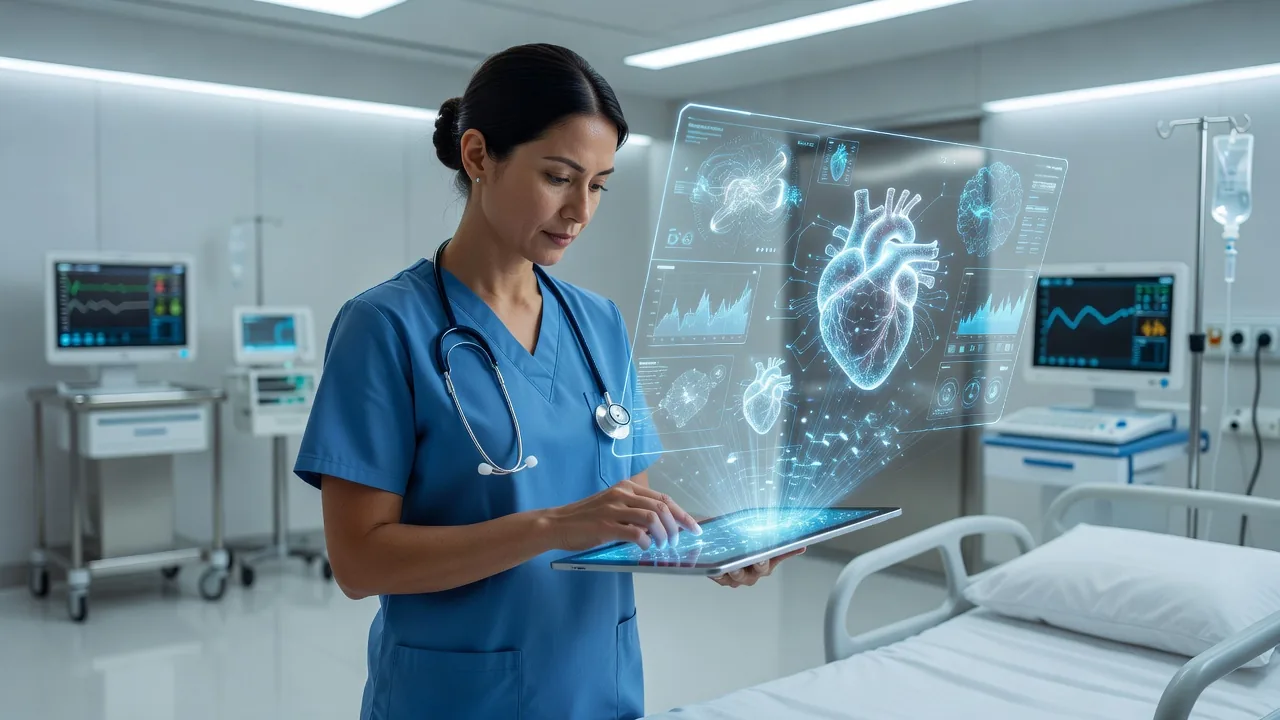
Artificial intelligence is no longer a futuristic promise in healthcare — it is an active, transformative force reshaping how doctors diagnose, treat, and monitor patients worldwide. In 2026, AI diagnostic tools have moved from research labs into hospitals across Asia, Europe, and North America, demonstrating real-world clinical impact.
Early Disease Detection: AI's Biggest Impact
One of the most celebrated applications of AI in healthcare is early disease detection. Machine learning models trained on millions of medical images can identify patterns invisible to the human eye, catching diseases at their most treatable stages.
In oncology, convolutional neural networks (CNNs) analyzing mammography scans now detect breast cancer with sensitivity rates exceeding 94% — compared to approximately 88% for human radiologists. Similar systems are being deployed for lung cancer screening, colorectal cancer detection, and diabetic retinopathy assessment.
Medical Imaging: Where AI Shines Brightest
Medical imaging represents the most mature application of AI in healthcare. Deep learning models have demonstrated remarkable performance across a range of modalities:
- Radiology: AI flags abnormalities in X-rays, CT scans, and MRIs, prioritizing urgent cases in radiologist worklists
- Pathology: Digital pathology platforms use AI to analyze tissue slides, quantifying tumor infiltrating lymphocytes and predicting treatment response
- Dermatology: Smartphone-based AI tools detect skin lesions with dermatologist-level accuracy, expanding access to care in remote areas
- Ophthalmology: AI screening systems deployed in Japan, India, and the UK are identifying diabetic eye disease and age-related macular degeneration at scale
Key AI Technologies in Healthcare Diagnostics
- Convolutional Neural Networks (CNNs) for image analysis
- Natural Language Processing (NLP) for clinical note analysis
- Transformer models for genomic data interpretation
- Federated learning for privacy-preserving model training
- Explainable AI (XAI) for clinical decision support
Real-Time Patient Monitoring
Beyond diagnostics, AI is revolutionizing patient monitoring. Intensive care units equipped with AI surveillance systems analyze continuous streams of vital signs, laboratory values, and clinical notes to predict deterioration hours before it becomes clinically apparent.
Sepsis prediction algorithms, for example, have reduced mortality in several large hospital systems by alerting care teams 6–12 hours before conventional diagnostic criteria are met. Similar systems are being applied to predict acute kidney injury, heart failure decompensation, and post-operative complications.
Wearables and Remote Diagnostics
The proliferation of AI-powered wearable devices has extended clinical monitoring beyond hospital walls. Consumer devices now perform medical-grade ECG analysis, detect atrial fibrillation, monitor blood glucose trends through non-invasive sensors, and track sleep-stage-specific respiratory patterns associated with sleep apnea.
Challenges and Ethical Considerations
Despite remarkable progress, significant challenges remain. AI diagnostic systems trained predominantly on data from high-income countries may underperform in diverse populations, raising important questions about algorithmic equity. Regulatory frameworks for AI medical devices are still evolving across different jurisdictions, creating uncertainty for developers and healthcare providers alike.
Additionally, the "black box" nature of many deep learning models has prompted calls for greater explainability — clinicians need to understand why an AI system reached a particular conclusion before they can trust it with patient care decisions.
The Road Ahead: AI-Native Healthcare
Looking forward, the next wave of healthcare AI will integrate diagnostic, therapeutic, and operational intelligence into unified clinical platforms. Multimodal models that simultaneously analyze imaging, genomics, electronic health records, and patient-reported outcomes will provide holistic clinical decision support that no single data stream could offer alone.
Japan, with its aging population and world-class healthcare infrastructure, is particularly well-positioned to lead this transformation. Government initiatives supporting AI-accelerated medical research and the deployment of AI diagnostics in rural healthcare settings are already bearing fruit across Kyushu and beyond.